Beginner Writing and Spelling Lesson #108WS Write sentences using ‘There is/There are’ and draw visuals

Students begin writing simple present tense sentences that describe daily habits and routines. Each lesson includes a short video that demonstrates the topic visually and provides guided examples to support writing and spelling practice. This lesson is
integrated with the Vocabulary, Grammar, Listening, and Speaking modules to reinforce learning through multiple skill areas.
Beginner Writing and Spelling Lesson #108WS Write sentences using ‘There is/There are’ and draw visuals Read More »

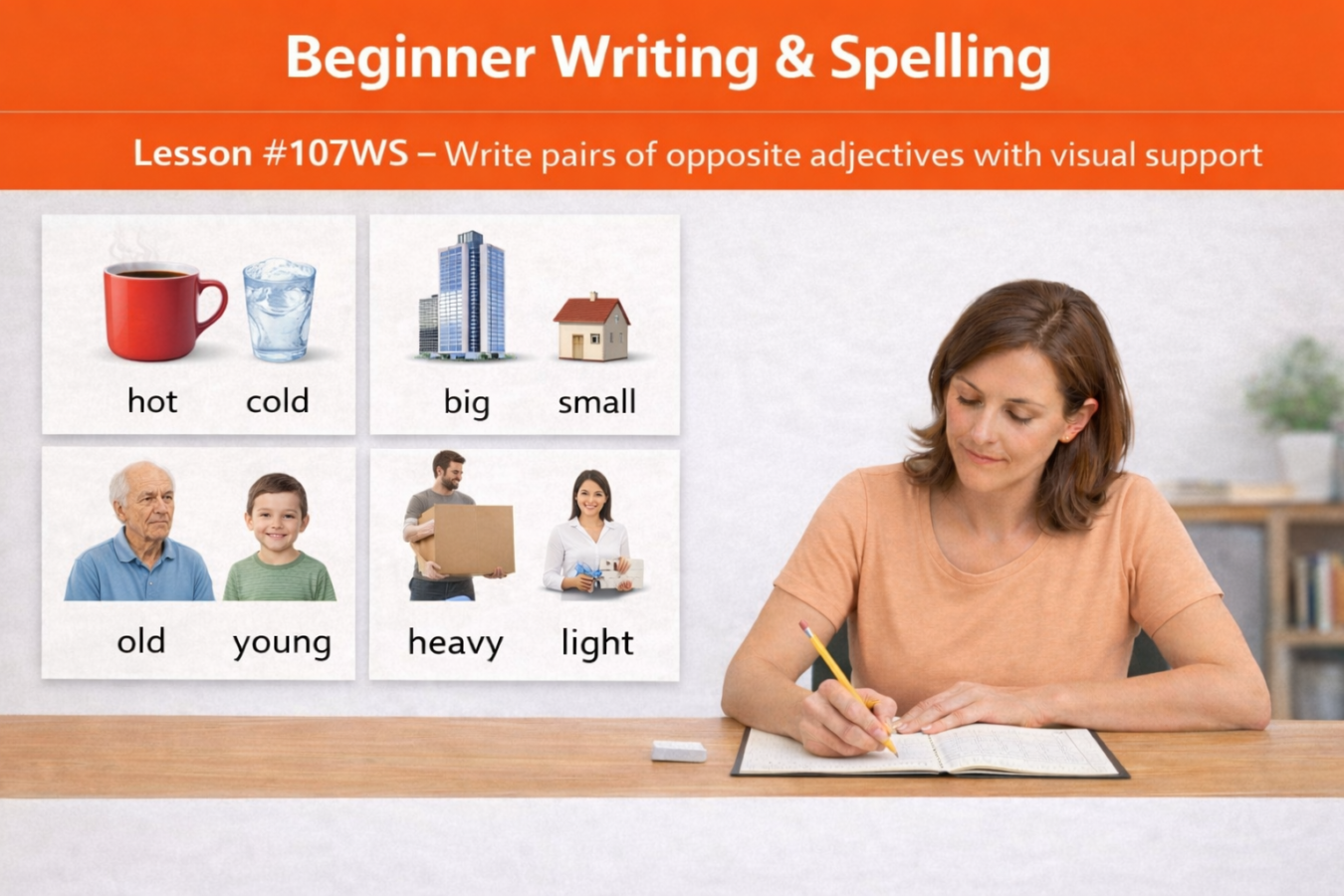
Beginner Writing and Spelling Lesson #107WS Write pairs of opposite adjectives with visual support

This lesson teaches subject pronouns and how to correctly use them when writing basic statements. Each lesson includes a short video that demonstrates the topic visually and provides guided examples to support writing and spelling practice. This lesson is integrated with the Vocabulary, Grammar, Listening, and Speaking modules to reinforce learning through multiple skill areas.
Beginner Writing and Spelling Lesson #107WS Write pairs of opposite adjectives with visual support Read More »

Beginner Writing and Spelling Lesson #106WS Write short sentences using present tense of verb to be

Students learn how to recognize and use common action verbs in writing simple sentences. Each lesson includes a short video that demonstrates the topic visually and provides guided examples to support writing and spelling practice. This lesson is integrated with the Vocabulary, Grammar, Listening, and Speaking modules to reinforce learning through multiple skill areas

Beginner Writing and Spelling Lesson #106WS Write short sentences using present tense of verb to be Read More »

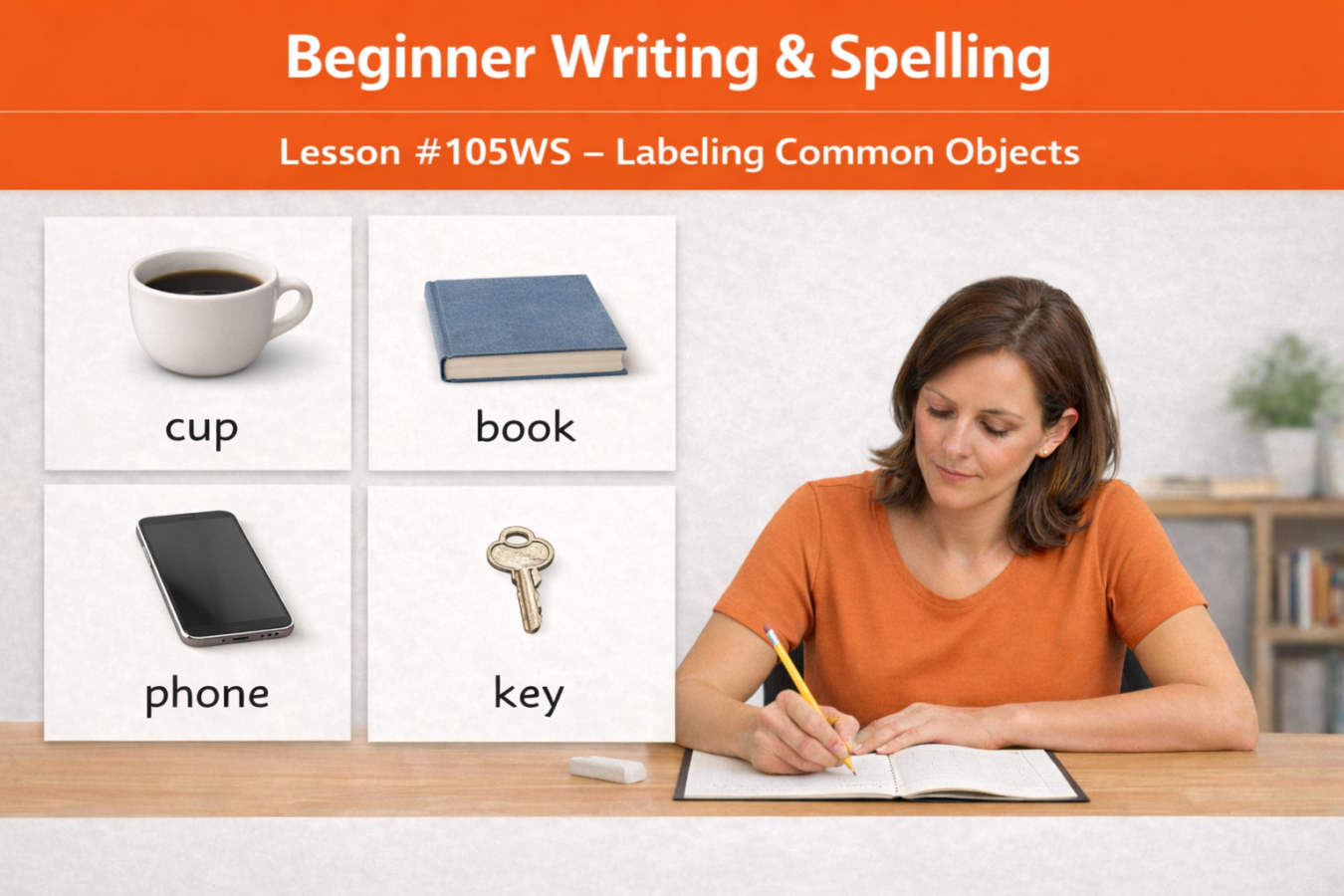
Beginner Writing and Spelling Lesson #105WS Write simple subject pronoun sentences and take quiz game

This lesson introduces common nouns and includes writing exercises that use basic naming words for people, places, and things. Each lesson includes a short video that demonstrates the topic visually and provides guided examples to support writing and
spelling practice. This lesson is integrated with the Vocabulary, Grammar, Listening, and Speaking modules to reinforce learning through multiple skill areas

Beginner Writing and Spelling Lesson #105WS Write simple subject pronoun sentences and take quiz game Read More »

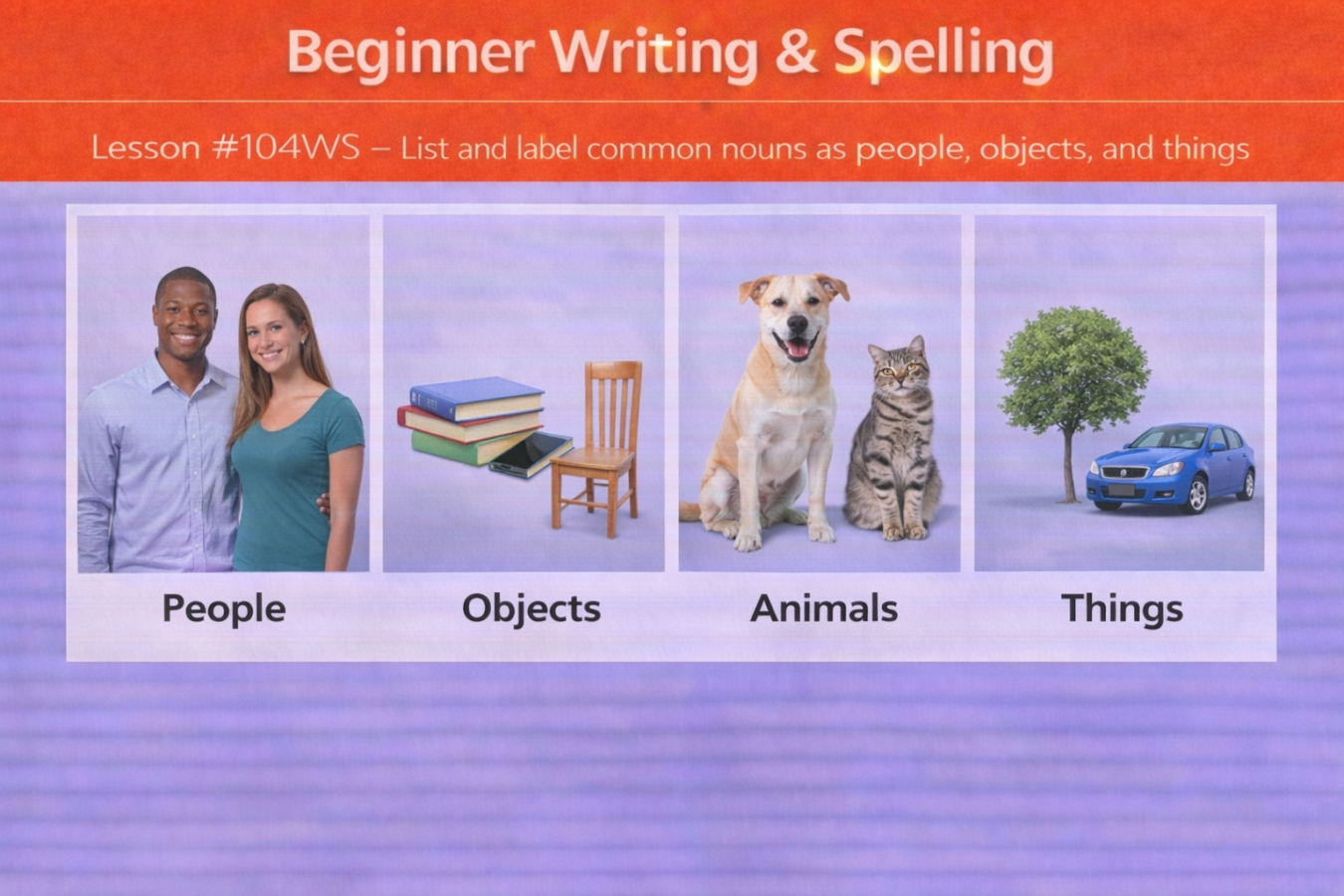
Beginner Writing and Spelling Lesson #104WS List and label common nouns as People, objects, things, animals

Students explore the difference between short and long vowel sounds and practice writing example words for each. Each lesson includes a short video that demonstrates the topic visually and provides guided examples to support writing and spelling practice. This lesson is integrated with the Vocabulary, Grammar, Listening, and Speaking modules to reinforce learning through multiple
skill areas

Beginner Writing and Spelling Lesson #104WS List and label common nouns as People, objects, things, animals Read More »

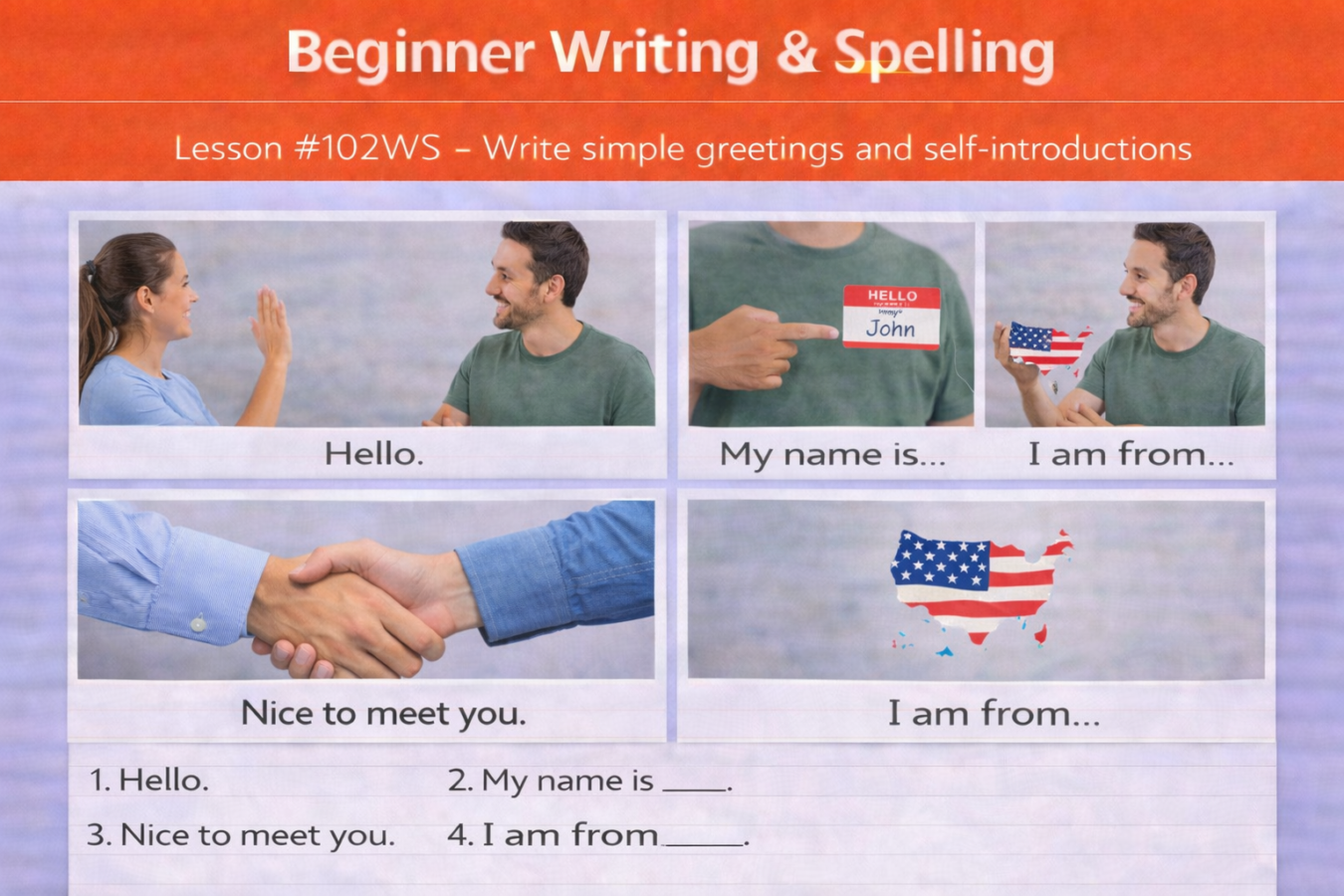
Beginner Writing and Spelling Lesson #102WS Write simple greetings and self-introductions

Students learn to recognize, write, and pronounce the second half of the English alphabet (N Z) with guided practice. Each lesson includes a short video that demonstrates the topic visually and provides guided examples to support writing and spelling practice. This lesson is integrated with the Vocabulary, Grammar, Listening, and Speaking modules to reinforce learning through multiple skill areas.
  • Objective: Recognize and pronounce the remaining 13 letters of the English alphabet.
  • Activities:
    • Show flashcards of individual letters.
    • Practice American English pronunciation.
    • Matching game: match the uppercase to its corresponding lowercase letter.
    • Sorting activity: Arrange letters in alphabetical order.
    • Watch Video #2 about the English Alphabet

Beginner Writing and Spelling Lesson #102WS Write simple greetings and self-introductions Read More »

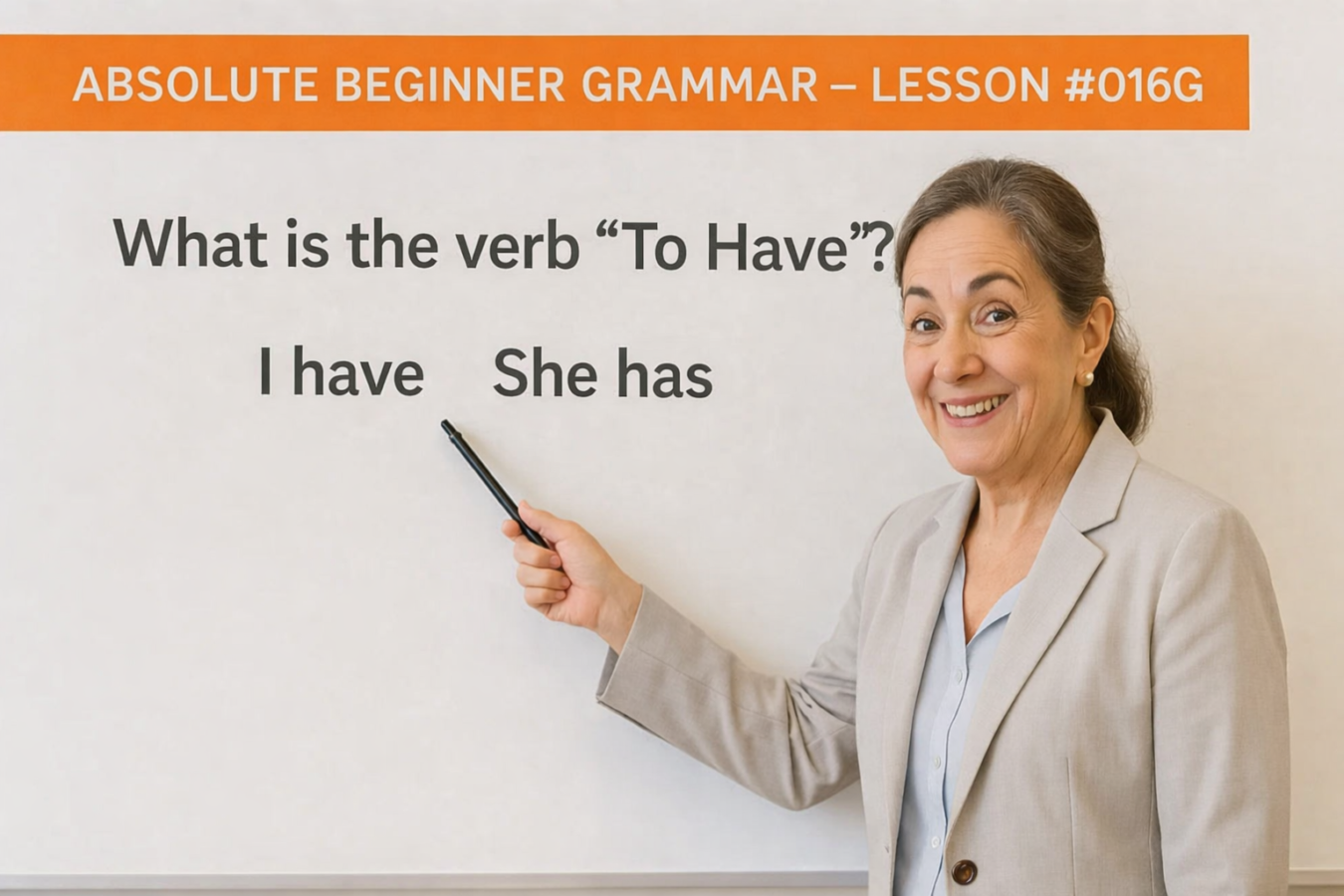
Absolute Beginner Grammar Lesson #016G What is the verb ‘To Have’?

Absolute Beginner Grammar #016G — The Verb “To Have”

English
Learn how to use the verb to have to talk about possession and relationships. You’ll practice simple sentences using have and has. A short video shows how this verb is used in everyday English.

Español
Aprende a usar el verbo to have para hablar de posesión y relaciones. Practicarás oraciones simples usando have y has. Un video corto muestra cómo se usa este verbo en el inglés cotidiano.

Absolute Beginner Grammar Lesson #016G What is the verb ‘To Have’? Read More »

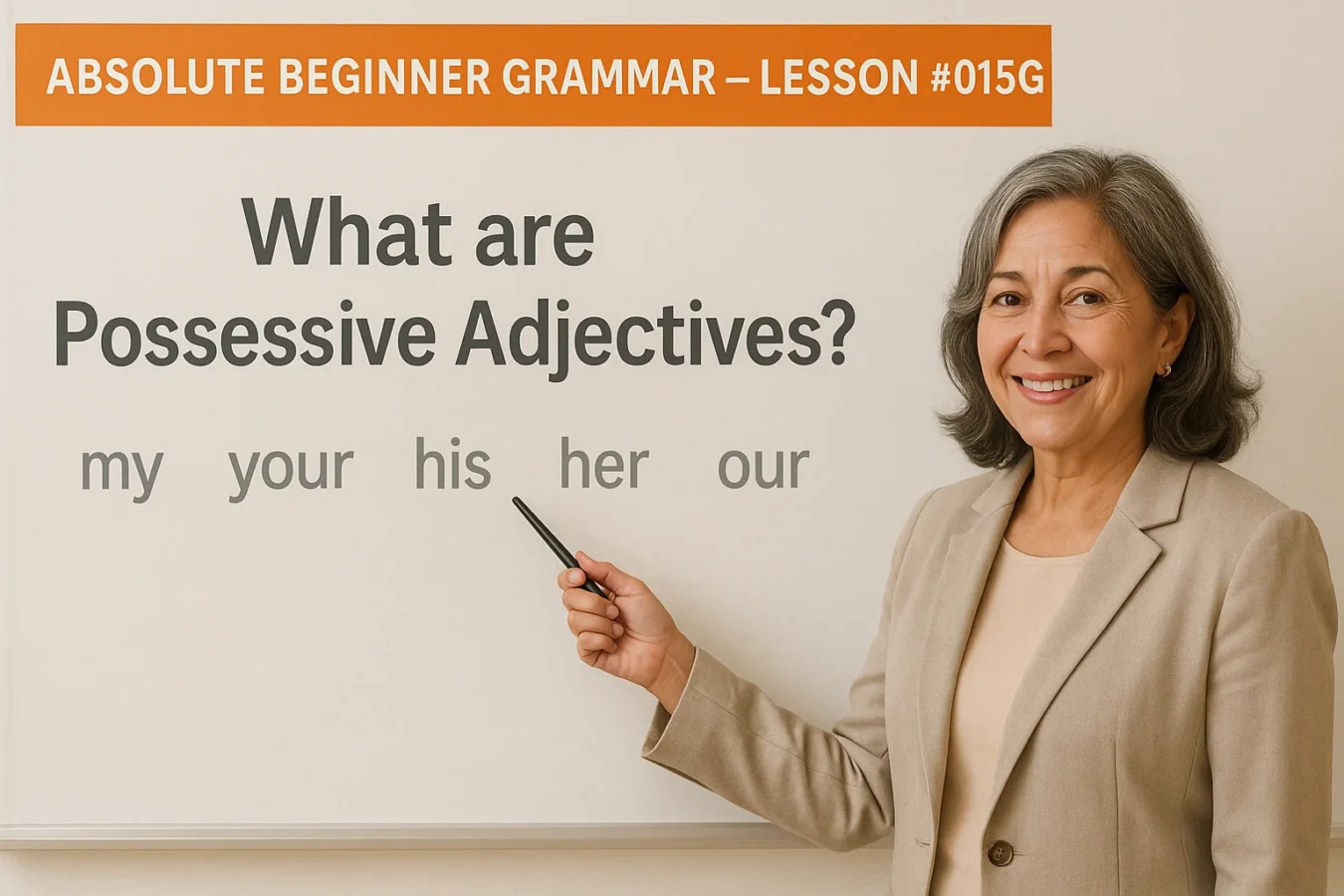
Absolute Beginner Grammar Lesson #015G What are Possessive Adjectives?

Absolute Beginner Grammar #015G — Possessive Adjectives

English
Learn how to show ownership using possessive adjectives like my, your, his, her, its, our, and their. You’ll learn to use them correctly in simple sentences. A short video shows clear examples you can follow.

Español
Aprenderás a expresar posesión usando adjetivos posesivos como my, your, his, her, its, our y their. Practicarás cómo usarlos correctamente en oraciones simples. Un video corto muestra ejemplos claros que puedes seguir.

Absolute Beginner Grammar Lesson #015G What are Possessive Adjectives? Read More »

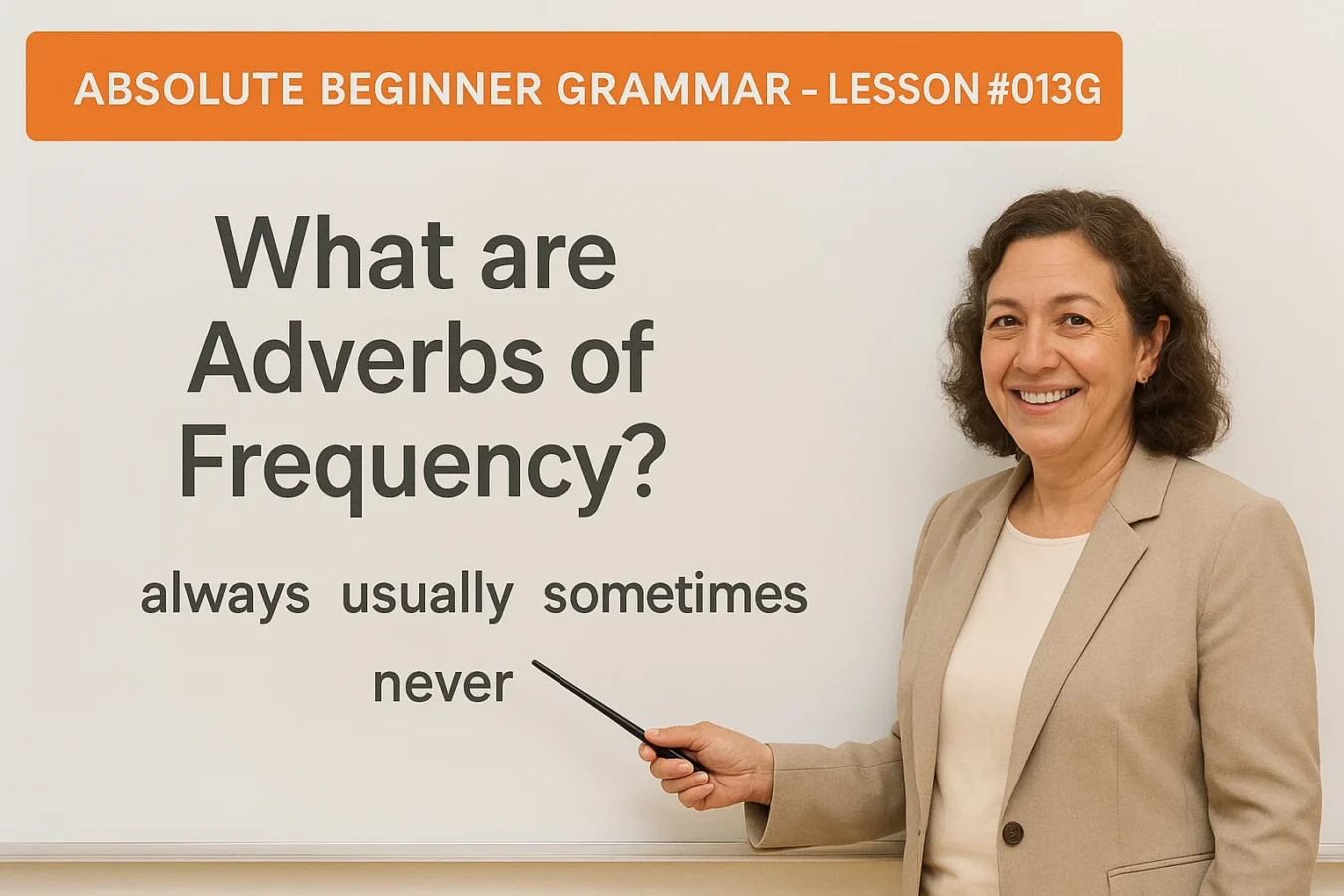
Absolute Beginner Grammar Lesson #013G What are Adverbs of Frequency?

Absolute Beginner Grammar #013G — Adverbs of Frequency

English
Learn how to talk about routines using adverbs like always, usually, often, sometimes, rarely, and never. You’ll learn to place them correctly in a sentence. A short video shows clear examples.

Español
Aprende a hablar de rutinas usando adverbios como always, usually, often, sometimes, rarely y never. Aprenderás cómo colocarlos correctamente en una oración. Un video corto muestra ejemplos claros.

Absolute Beginner Grammar Lesson #013G What are Adverbs of Frequency? Read More »

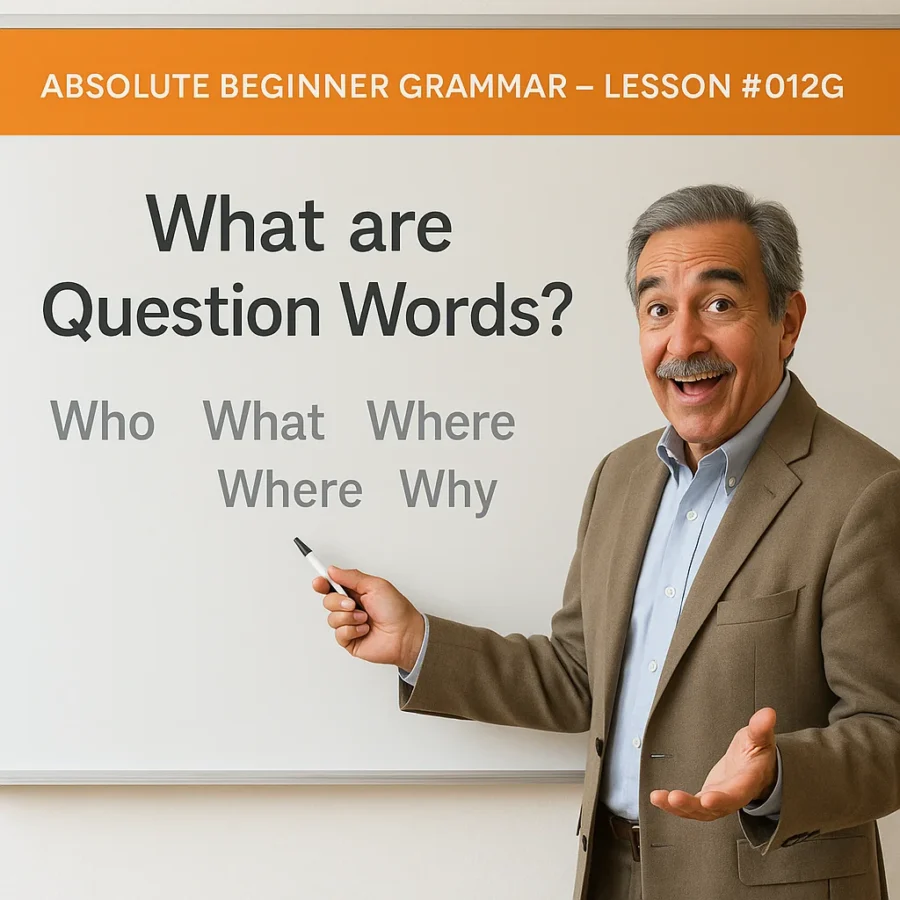
Absolute Beginner Grammar Lesson #012G What are Question Words?

Absolute Beginner Grammar #012G — Question Words

English
Learn how to ask simple questions using who, what, where, when, why, and how. You’ll learn the correct word order for clear communication. Short videos guide you step by step.

Español
Aprende a hacer preguntas simples usando who, what, where, when, why y how. Aprenderás el orden correcto de las palabras para comunicarte con claridad. Videos cortos te guían paso a paso.

Absolute Beginner Grammar Lesson #012G What are Question Words? Read More »